
Team & Growth
Fractional Developer vs. Full-Time: What to Hire First

Olga
September 14, 2026 · 6 min read
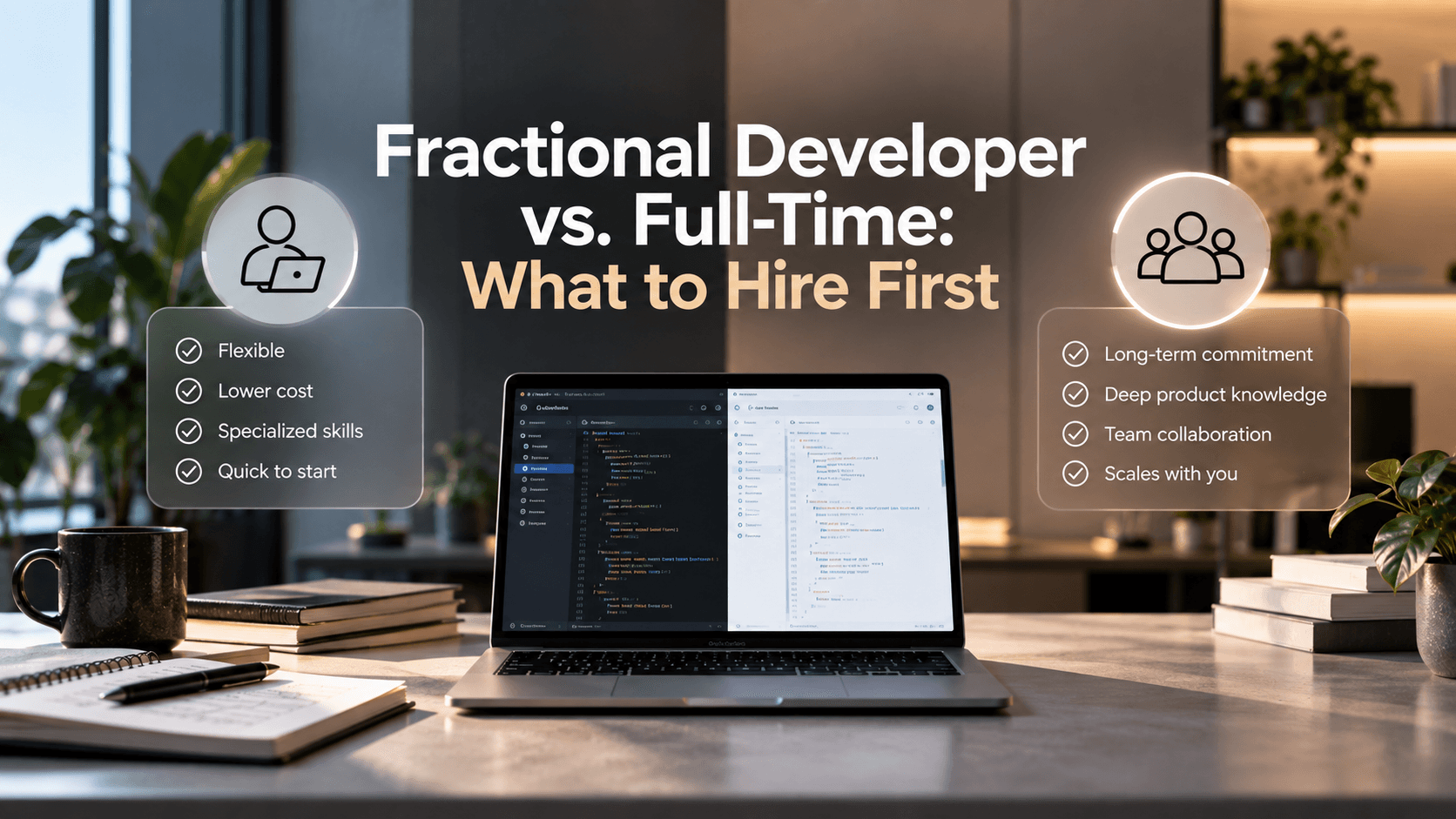
There's a specific moment a lot of small business owners and early founders hit: the product or site is live, it's working, and now there's a steady trickle of small features, fixes, and improvements that need someone's attention every month. The instinct is often to start thinking about a full-time hire. Before you do, it's worth running the actual numbers — because for most businesses at this stage, they don't add up the way you'd expect.
The real cost of hiring too early
A senior software engineer's base salary in the US now averages somewhere between $157,000 and $210,000 a year, depending on the source — and that's before benefits, payroll taxes, equipment, and the recruiting time it takes to find them. Layer in the cost of a hire that doesn't work out once salary, any equity granted, and severance are counted, and the number for a single bad early technical hire regularly exceeds $150,000. That's before they've shipped anything, and it's a number most small businesses and early-stage products simply can't absorb while they're still figuring out what needs building next.
$157K–$210K+
average senior engineer base salary
Before benefits, taxes, equipment, and recruiting costs are added on top.
$150K+
cost of one bad early hire
Once salary, equity, and severance are counted — before accounting for the time lost.
$600–$2,200/mo
our retainer range
Up to 8, 16, or 30 hours a month of senior development — no recruiting cycle, no ramp-up.
What a retainer actually buys you
The core difference is what you're paying for. With an in-house hire, the clock starts before any work gets done — recruiting, onboarding, tooling, context-building — all billed to your budget before a single feature ships. A retainer flips that: you're paying for output starting immediately, from someone who's already been through this exact kind of onboarding many times before. And when your priorities shift — they will — you adjust the scope for next month instead of managing a resignation or a layoff.
What this looks like with us
Starter is $600/month for up to 8 hours — small features, fixes, UX tweaks, with 48-hour email support. Growth, our most popular plan, is $1,200/month for up to 16 hours — new features, dashboard and UI improvements, a monthly check-in call, and 24-hour priority support. Product Partner is $2,200/month for up to 30 hours — ongoing design and development with light input on your product roadmap and bi-weekly meetings. All three scale up or down as your actual needs change, month to month, without a hiring or termination process attached to the decision.
When to graduate to in-house
A retainer isn't meant to be forever, and we'd tell you so directly if you asked. It's the right tool for the stage where your development needs are real but not yet full-time — the same build-with-a-partner-first, hire-in-house-once-it's-proven approach Y Combinator's own startup guidance has pushed for years. The honest signal that it's time to hire is when you'd genuinely have enough dedicated work to fill someone's calendar every week, not just most weeks. Until then, the math tends to favor a partner who shows up when you need them, at a fraction of the cost of finding out the hard way.
Sources
Related services


Need ongoing help without a full-time hire?
Book a short call and we'll figure out which plan actually fits what you need.